Showing posts with label Date idea. Show all posts

Wednesday, 4 April 2018

Ajanta caves - a historical wonder with a touch of geology

Recently I was very lucky to visit the Ajanta Caves, located on the Deccan Plateau. They're called caves, but really they're beautifully carved and decorated sacred spaces chipped out of the bedrock. I've been studying images of the caves for years so it was with great excitement that I was able to actually go see them in person. When I realised there was a geological reason for the caves you can imagine my excitement.
A selfie on the path up to the caves. My excitement is overprinted by the squinty eyed 'the sun is touching me' look. Notes for next time: Carry more water and bring more snacks.

Panorama of the valley hosting the caves. During the wet season, multiple waterfalls flow into this valley.

The rock here is vesicular basalt. Vesicles are small holes formed by pockets of gas that exolve from the melt but don't quite make it out of the lava while it solidifies.  This basalt is part of the Deccan Traps, a sequence of flood basalts that erupted at the end of the Cretaceous (66.25 mya). Some researchers have proposed a mantle plume (think Hawaii volcanos) is responsible for these volcanos however this doesn't explain the epic amounts of lava. To support the plume idea, I'd like to see more identification and dating of eruption points. There is some evidence to suggest that the Deccan Trap volcanos were altered by significant meteroite impact which disrupted the internal fluid flow of the mantle and provided additional hot magma.  Personally, I subscribe to the wake theory where fast plate movement creates a wake, which allows the delivery of hot mantle material very close to the surface. Similar to what is seen in Australia's Eastern Volcanic Province, volcanic vents would then form where ever pre-existing faults permit.

What you can see here appears to be calcite (left my acid at home - curses) which has crystallized from groundwater filling in weaknesses in the rock. Interestingly, none of the basalts here exhibit columnar formation. This may be the result of human activity and fast weathering during the wet season though.


Some of the caves have unfinished roofs or floors showing pahoehoe texture. This is the reason the caves exist. Pahoehoe is the ropy texture that forms on the top of lava as the surface starts to solidify but the liquid is still moving. The surface bunches up, a bit like the crust on top of custard, as the lava continues to flow beneath. In this case, the flow was top to the bottom right. The semi-planar form of the pahoehoe indicates the individual lava flows were able to solidify before the next eruption. The slight difference in cooling temperature and grain size means there's a plane of weakness between the flows. This is where the groundwater eventually seeps through, depositing bands of calcite as seen above.
The white calcite in the black basalt showed the cave-makers where weaknesses in the rock were. Looking at the calcite on the sides of the valley wall, it's easy to see this marker has controlled the height of many of the caves. It's a lot easier to create a room when you can undermine the roof and know it'll fail at a specific point.

  
Outside one of the amazingly carved rooms. Though, I've seen beautifully carved basalt in Bali, i wasn't prepared for the rich wonder that I found in every cave.

This is about half a meter across - fantastic detail! Basalt, made up of interlocking, fine crystals is a great carving rock. Though it's a lot harder to work than rocks like marble (metamorphic) or sandstone (sedimentary), it's crystal format resists weathering much better.

I would never ever take something from a monument like this. However, the authorities are building a new visitors center out of rock that's been quarried nearby. I raided their waste pile for this sample - look at those lovely pyroxenes (largish brownish crystals)!

Wednesday, 28 January 2015

Date Idea - 28/1/2015 - Losar, Tibet

Image from the Harvard Art Museum, item 2.2002.107. Photograph taken by Samuel Bourne (1834-1912) of Contorted Strata at Losar in 1967.

It'd be awesome to find this uplifted strata and take a gigapan pic to compare with Sam's image. I'm not sure how 'contorted' the strata is, I suspect the appearence of much of the folding is actually due to erosion and faulting.

Wednesday, 7 January 2015

Date ideas: 7/1/2015 - Waimea Canyon, Hawaii


There are many, many things in Hawaii that I wish to see. Waimea Canyon just made the list.


Located in Kauai, part of this canyon structure was create by water, the rest by a sequence of faults after volcanic collaspe. What appear to be sedimentary layers are actually basalts which have weathered in the humid climes to a charateristic red colour.
A friend of mine who's completed this hike about a month ago tells me somewhere here there is a waterfall and a pool that he recomends swimming in. I might have to look into that.

Wednesday, 31 December 2014

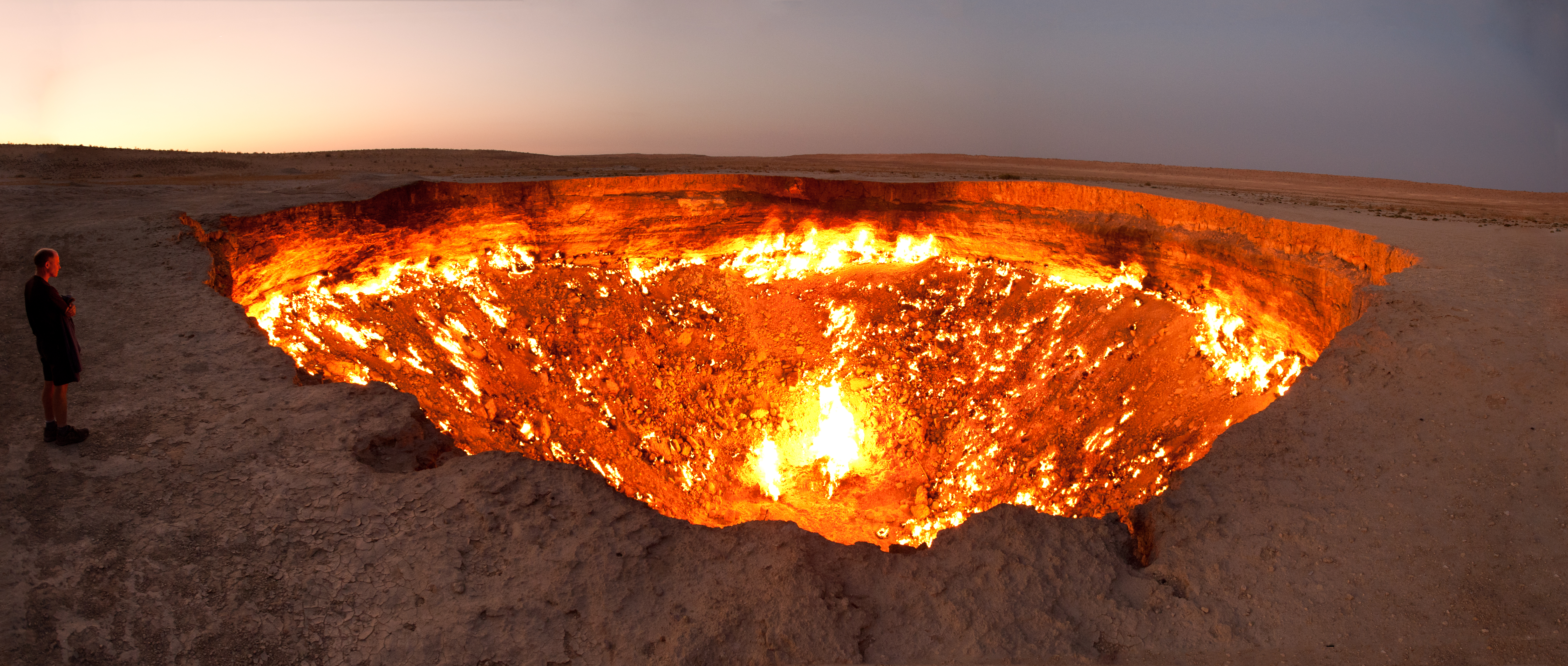
Date Idea: 31/12/2014 - Doorway to Hell, Derweze, Turkmenistan

Nothing says "end of 2014" like fire!

Someone breached a gas field and set it on fire. I'd love to go see this. I suspect this'd make exploration drilling in the area quite tricksy.

Darvasa gas crater aka Doorway to Hell. Picture by Tormod Sandtorv, Image grabbed from wikimedia.

Wednesday, 17 December 2014

Date Ideas: 17/12/2014 - Canadian Rockies, Alberta, Canada


Many, many things to see here. Todays selection is glacial fed, Lake Morain in Banff National Park.

Lake Morain at Night by Andrey Popov.

Wednesday, 10 December 2014

Date Ideas: 10/12/2014 - Azul Macaubas quarry, Brazil (counter top geology)


I haven't seen this rock in person but the images I've found on the web make it a must see / must have. It seems to be a quartzite with a delicate blue colour introduced by dumortierite. The website that sells it is flash so not so good for getting images from however you should have a flick through their page (clunky though it is) - here. This is sold as Azul Macaubas, or sometimes Blue Marble. It looks best as large pieces such as bench tops. I think I need a bath made out of this, or a swimming pool maybe. Tiles would work beautifully as well.


I got the below image from here, and my structural geology brain went wow - look at those refolded folds!

Wednesday, 26 November 2014

Date Idea: 26/11/2014 - Yucatan, Mexico

Cenotes (sinkholes and cave systems) in Yucatan, Mexico. Image and good explanation of the features to be found from this blog.

Wednesday, 19 November 2014

Wednesday, 12 November 2014

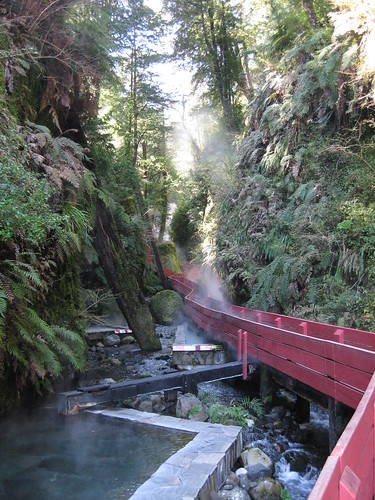
Date Idea - 12/11/2014 - Termas Geometricas, Chile

Because you might as well relax and enjoy yourself if you're planning on spending sometime looking at rocks I present: Termas Geometricas near Pucon in Chile. It offers a range of springs in a natural setting (some with waterfalls) for approximately $40 AUD per person. It's on the list!

Image from here - a pretty good website full of things to see and do in Chile.

Wednesday, 3 September 2014

Date Idea 3/9/2014 - Vermilion Cliffs, Arizona


According to Beautiful Places to Visit.com, permits are required to access the vermilion cliffs and only 20 are issued each day. Looks like a beautiful sedimentary landform. I'd love to go explore this properly - look at that unconforrmity!


Wednesday, 27 August 2014

Date idea 27/8/2014 - Petrified Forest


I've spent some time teaching at the Fossilised Forest on the shore platform at Inverloch, Victoria. It's quite a sight to see huge tree trunks that have been knocked over in a flooding event and preserved with the mud still clinging to the rocks. I've recently found out about an even more impressive fossilized trees - The Arizona Petrified Forest (http://www.nps.gov/pefo/index.htm). Not only does this place have a forest of preserved trees, it also has some amazing fossils too.


Wednesday, 20 August 2014

Date Idea 20/8/2014 - Icelandic volcanos

I've probably posted about Iceland already, but all geologists should visit this country - where else can you stand on a divergent plate boundary AND the results of a mantle plume? I recently got linked this update about recent activity and the possibility of another large volcano.

Not only great geology but also great scenery - Ásbyrgi 

Wednesday, 13 August 2014

Date Idea 13/8/14 - Meteorites

Having read a post on geology.com regarding starting a meteorite collect, I've deiced that hunting meteorites might make and enjoyable date activity. Not only can this be done anywhere (some places are better than others), there are also many different types to collect!

A couple of the researchers at Monash University go out to the Nullibore to hunt meteorites. This location has some distinct advantages. Due to the limited erosion and weathering, meteorites are preserved in-situ for a long long time. This increases the chances of finding them. Other locations that would be productive are known strewnfields. Areas where meteorite fragments have already been found where more might be discovered. Recently, 10th July 2014, a meteorite was seen from Melbourne and Sydney (as reported in The Age newspaper). It was recorded by a number of people. A meteorite this recent would be amazing to find.


Wednesday, 6 August 2014

Date Ideas: Victoria Falls - 6/8/2014

Victoria Falls - A basalt plateau over which plunges a terrific volume of water eroding sandstone gorges downstream. This is the wides waterfall on the planet.

Uploaded to Wikimedia by - Vberger


Photo by: the ISS Expedition 7 crew - The Gateway to Astronaut Photography of Earth


Wednesday, 16 July 2014

On a date -16/7/2014

No date ideas this week (or next) because I'm off to Germany for a holiday-date. I promise to post pics of rocks when I get back. In the mean time, here's a lovely image of some folds:

Folded beds, South Australia. Total Magnetic Intensity (TMI) - Reduced to the Pole (RTP) image hosted on SARIG. Elder Rock is located in the center of this image (MGA54 357130E 6367250N).

Wednesday, 9 July 2014

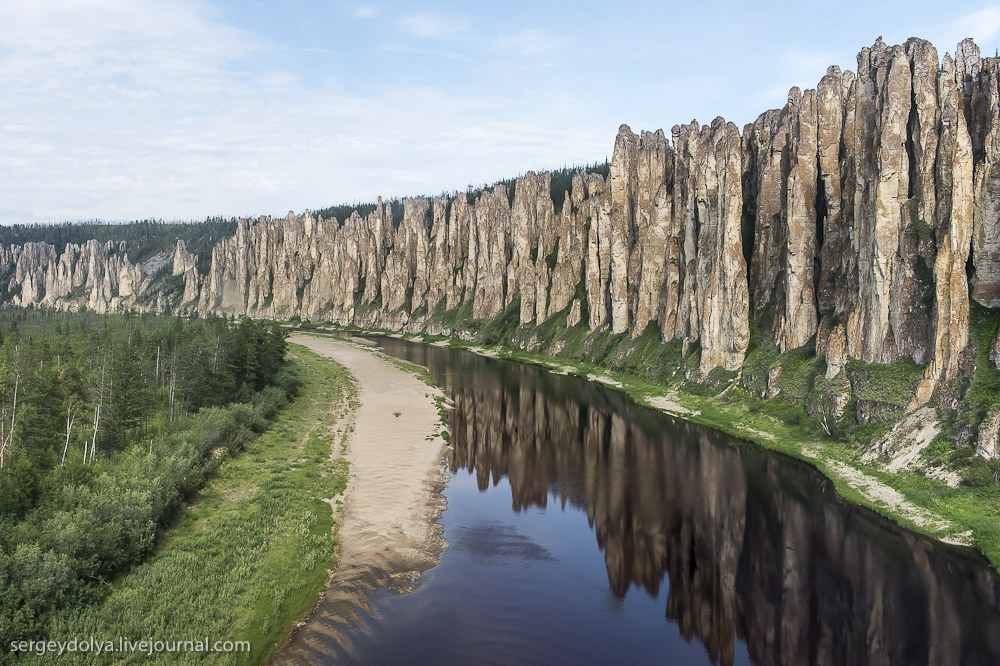
Date Idea 9/7/2014 - Hill of Seven Colours, Purmamarca, Argentina

23°44′38″S 65°30′04″W
Sedimentary rocks can make some of the prettiest outcrops. The Hill of Seven Colours is worth a visit for looking at it, but there is also a structural side that needs investigating - are those trust faults I spy?


Wednesday, 2 July 2014

Date ideas 2/7/2014 - Dead Sea

The Dead Sea is actually a very very salty lake (about 9 times saltier than the ocean). It has this high concentration of salts as the Dead Sea is a closed basin and termination point for a number of water sources. Over time these rivers have dissolved minerals and transported them to the Dead Sea. The water has evaporated, concentrating the minerals in the remaining sea water. (Interesting side note: the Dead Sea is located on the Dead Sea Transform, part of the Jordan Rift Valley). Many people visit the Dead Sea for it's supposedly healthful waters - I wonder if the water could be considered the opposite of Homeopathy?

Also, hills of halite (salt)!

Anyway, it looks beautiful and would be quite nice to visit if we could avoid the tourists.


Wednesday, 18 June 2014

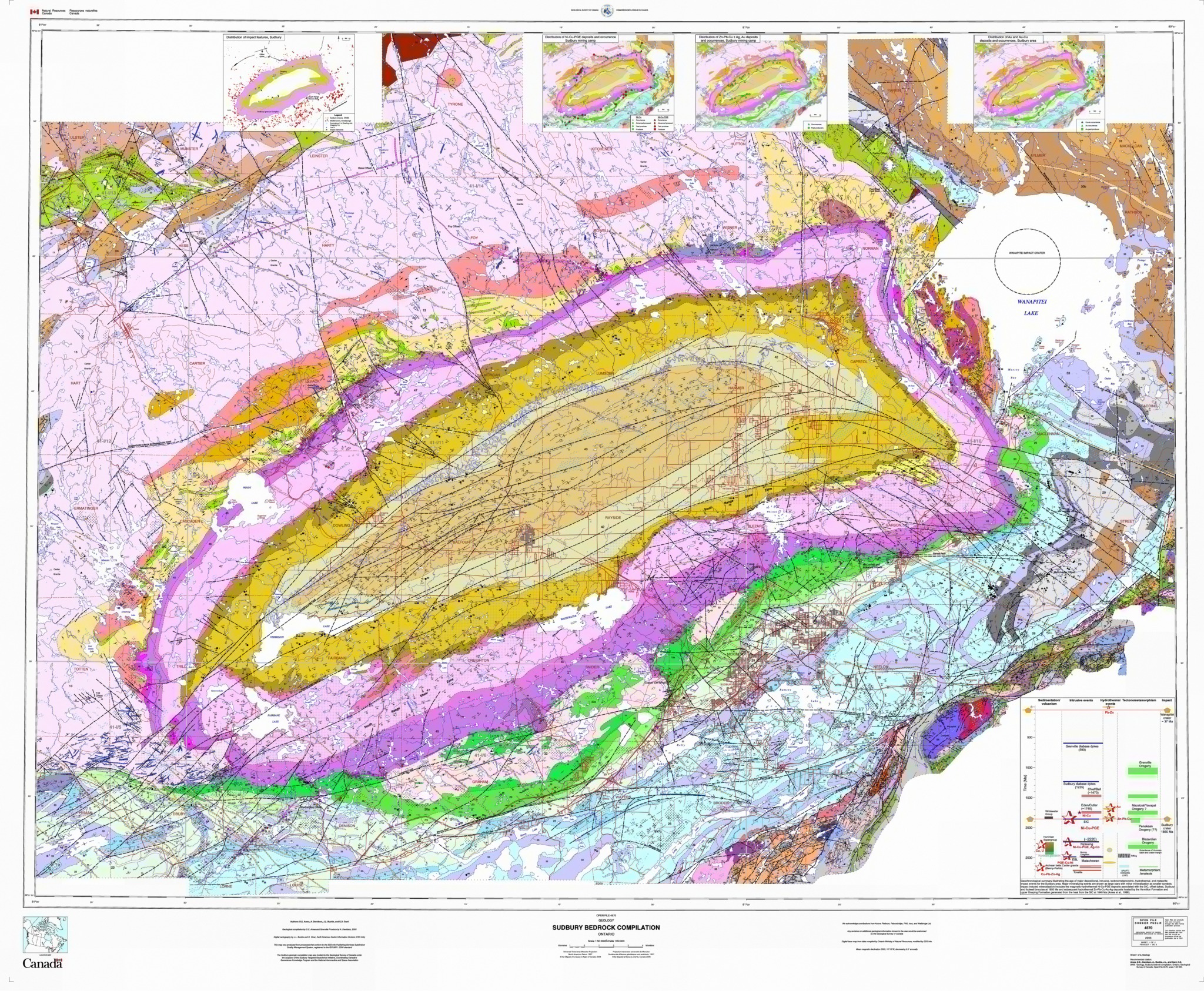
Date ideas 18/6/2014 - Sudbury Igneous Complex

46.673363, -81.025603
I've been marking honours exercises recently and as a result I've developed a temporary interest in the Sudbury Igneous complex. This mineralised region is the result of a meteorite impact. The impact shattered the country rock and the super high temperatures melted the sulphides. These then settled around the breccia creating banded massive sulphides. It's much more complex than that, but I haven't examined this case study all that deeply. I'd like to fix that though... this would make a lovely couple of weeks camping trip. I wonder if we could finagle a mine visit or three.

Fall back breccia - Black Onaping Formation with pink granitic clasts. Image hosted by Mindat.com (which is awesome, you should visit it!)


A well studied area due to to mineralisation - every one likes a geological map. Image hosted by the University of Western Ontario